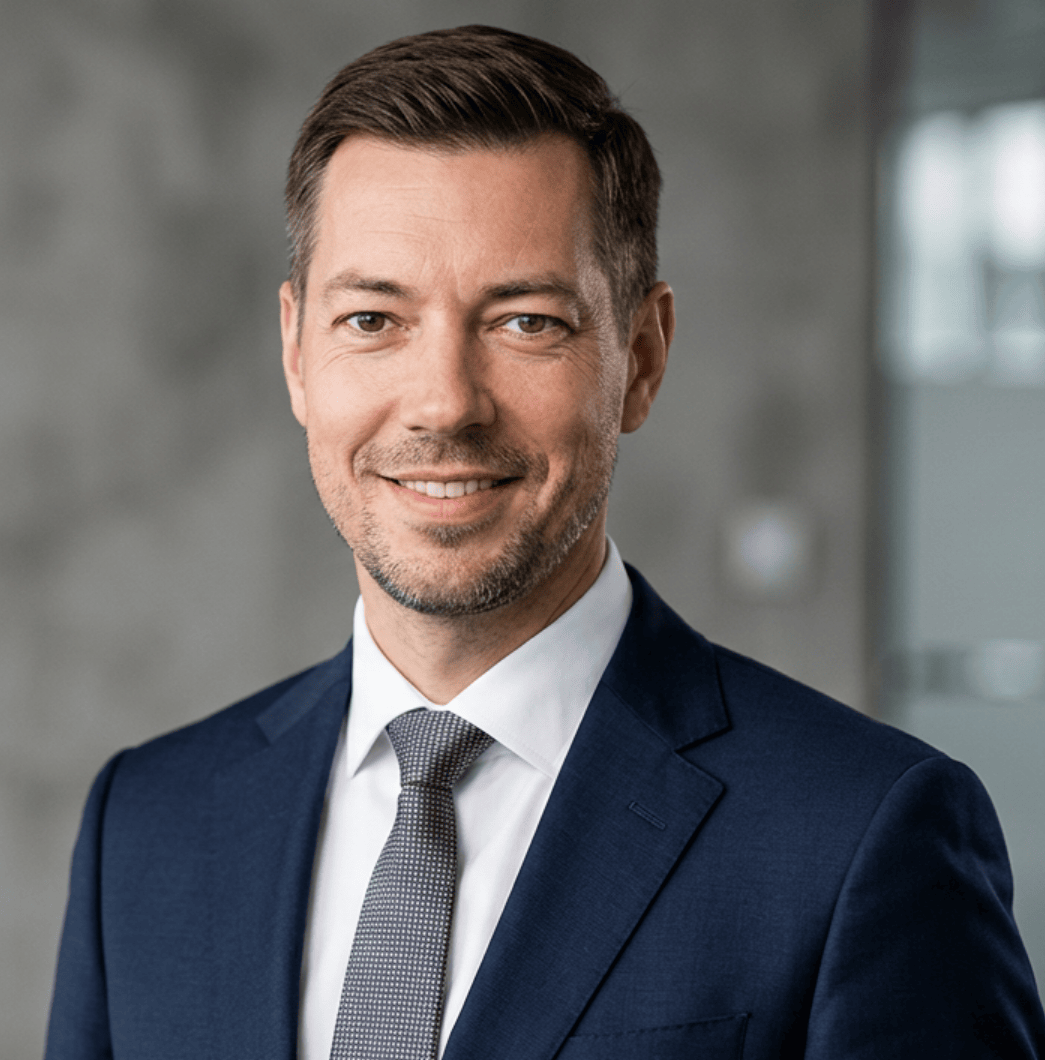
Nils Silinevics
Partner · AML & Crypto Compliance · Former FIU Investigator
We specialize in cases others won't touch — account ownership disputes, crypto inheritance, undocumented source of funds, sanctioned nationality freezes, and situations with no obvious solution. If you have been told your case is impossible, talk to us.
Our client had registered his Binance account using a friend's identity in 2018, when he was living in a country where Binance was not available. Years later, the friend moved away and contact was lost. Binance initiated an AML review and requested KYC verification — but the account holder name did not match our client's identity. Standard appeal failed. We built a legal case proving beneficial ownership through transaction history, bank records showing the source of funds, and a sworn affidavit. After 11 weeks of legal correspondence with Binance's compliance team, the account was transferred to our client's name and unfrozen.
The deceased was a German resident with crypto on a Swiss exchange. The heirs were in the UK. The death certificate was in German; the exchange required English apostilled documents. The exchange's compliance team was unresponsive for 4 months. We coordinated across three jurisdictions: obtaining apostilled and translated death certificates in Germany, filing inheritance declarations under UK law, and issuing legal demands to the Swiss exchange under Swiss inheritance law. Funds were released to the heirs after 5 months.
Our client mined approximately 150 BTC in 2011 using a GPU. The mining rig was long gone, the mining pool had shut down, and there were no bank records — he had paid electricity in cash through a shared apartment. When he tried to cash out on Kraken in 2024, the exchange requested source of funds documentation for a 13-year-old mining operation. We reconstructed the mining history through blockchain analysis — proving that the BTC originated from the coinbase transactions of blocks mined in 2011 — and prepared a legal declaration supported by blockchain forensic evidence. Kraken accepted the documentation after 7 weeks.
Our client is a dual citizen (EU + Iran by birth, never lived in Iran as an adult). When OKX implemented enhanced sanctions screening, his account was automatically frozen due to his Iranian citizenship. He is an EU resident with legitimate income. We prepared a legal package documenting his EU residency, employment, and tax compliance, and argued that his EU citizenship should govern his regulatory status. We engaged OKX's compliance team through legal channels and secured the account unfreeze within 3 weeks — without requiring him to renounce his Iranian citizenship.
Complex cases fall into six broad categories. Each requires a fundamentally different legal strategy:
Accessing a deceased person's exchange account, hardware wallet, or seed phrase. Cross-border death certificates, missing wills, unknown exchanges.
Account on a friend's, partner's, or family member's name. Fake names. Name changes. Dual citizenship. Business partner dissolution.
BTC bought for cash in 2012. Mined in 2011 with no records. Received as a gift. Funds from a defunct business. The hardest category — and the most common.
Frozen because of citizenship of Iran, Russia, Venezuela, Syria, or other sanctioned countries — even with legitimate funds and EU/UK residency.
Lost 2FA, dead email, changed phone number, forgot which exchange. Not a hack — just time and life making access impossible.
Binance left your country. The exchange lost its license. You did not migrate in time. Your funds are stuck in a regulatory no-man's-land.
Hidden crypto assets in divorce proceedings. Valuation disputes. Exchange accounts in one spouse's name with community funds.
If you have a complex case, you have probably already tried the standard approaches. You submitted a support ticket. You uploaded your documents. You waited. Maybe you received an automated response telling you to "be patient" or that your case is "under review." Weeks passed. Nothing happened.
Here is why:
We start by understanding your situation completely — not just the account freeze, but the full history. How was the account created? Where did the funds originate? What documentation exists? What has been tried? We review blockchain history, correspondence with the exchange, and any existing documentation. This phase typically takes 1-3 days.
Standard approaches fail because complex cases require non-standard solutions. We develop a strategy specific to your situation. For an inheritance case, this might involve coordinating with notaries in three countries. For undocumented source of funds, it might involve blockchain forensics to prove mining origin. For an ownership dispute, it might involve a legal declaration of beneficial ownership supported by transaction analysis.
We bypass support tickets and communicate directly with the exchange's compliance team through formal legal channels. Our letters are drafted under Swiss legal privilege, creating a paper trail that exchanges take seriously. We name the specific regulations that apply, the documentation we are providing, and the timeline we expect.
If the exchange refuses to engage, we escalate. This can include complaints to the relevant regulator (FINMA, FCA, BaFin, etc.), formal legal proceedings in the exchange's jurisdiction of operation, or coordination with law enforcement if criminal elements are involved. Most cases resolve before this stage — but the willingness to escalate is what makes earlier stages effective.
"As a former European Financial Intelligence Unit investigator, I have seen these exact situations from the other side. I know what compliance teams look for, how decisions are made internally, and what documentation actually moves a case forward. The cases that seem impossible to an outsider are the cases I understand best — because I used to be the person saying no. Now I am the person making them say yes."
Yes — this is one of our most common case types. We need to establish that you are the beneficial owner of the funds, even though the account is in another person's name. This involves transaction history analysis, proof of fund origin, and a legal declaration of beneficial ownership. The process is more complex than a standard KYC update, but we have successfully resolved dozens of these cases.
You need to prove your status as an heir or executor. This typically requires a death certificate (apostilled and translated if cross-border), a grant of probate or equivalent inheritance document, and your own KYC documentation. The exchange may also require a legal letter explaining the situation. See our crypto inheritance page for a detailed guide.
This is the single most common 'impossible' case. The approach depends on how you acquired it: if through an exchange that no longer exists, we can use blockchain forensics to trace the original purchase. If through LocalBitcoins or P2P, we reconstruct the transaction history on-chain. If through mining, we prove the coinbase transaction origin. See our undocumented source of funds page for details.
Yes, particularly if you hold citizenship of a sanctioned country but are a legitimate resident of an EU/UK/Swiss jurisdiction. We build a case that your regulatory status should be governed by your residency, not your birth citizenship. See our sanctioned nationality page for more.
A denial is not the end — it is the beginning of the legal phase. Exchanges deny based on automated processes or front-line compliance decisions. A formal legal appeal from Swiss counsel, with additional documentation and a different legal framing, often succeeds where the initial attempt failed. We have overturned numerous denials.
Complex cases typically take 6-16 weeks. Simple ownership disputes can resolve in 4-6 weeks. Cross-border inheritance cases can take 3-6 months. Undocumented source of funds cases vary widely — some resolve in 5 weeks, others take 4 months. We provide a realistic timeline after the initial analysis.
Complex cases require more legal work than standard unlocks, so fees are higher. However, we work on a transparent fixed-fee basis — you know the cost before we start. For complex cases, fees typically range from €1,500 to €5,000 depending on complexity. We offer a free initial assessment to determine which tier your case falls into.
Yes. When an exchange exits a market (like Binance leaving the Netherlands, Belgium, or Canada), it typically gives users a migration window. If you missed that window, your funds may be stuck. We can help by engaging the exchange's compliance team directly and coordinating a delayed migration or withdrawal. See our exchange country exit page.
Related resources: For standard freeze resolution across 21 exchanges, see our crypto account unlock practice. For tracing and recovering stolen crypto, our fraud recovery team handles phishing, SIM swaps, and investment fraud. Key terms are explained in our compliance glossary.
Standard freeze resolution across 21 exchanges — AML, KYC, SoF, sanctions.
Tracing and recovering stolen crypto assets through legal channels.
Key terms for understanding complex crypto compliance situations.
Tell us everything — the more detail, the better. The complexity of your case is not a problem; it is why we exist. We respond within 6 hours with an initial assessment.